What happens when that winsome pound puppy you saw in a newspaper column morphs into Cujo once you get him home?
What happens when a cute little kitten you found online in Petfinder turns out to be incredibly fierce, non-cuddly and bristles with teeth and claws?
Too often, such animals are handed back quickly to pounds and rescue organizations or, even worse, dumped and left to die -- unwanted and unloved.
While some animals have emotional and aggression issues that are tough to solve and may pose a hazard, especially if there are small children around, and that may prevent them from being realistic candidates for adoption, too many people give up too soon with what seems to be an unlovable animal. With time, patience and love, an unpromising pet can become a loving companion.
That's what happened with our own Sweet Pea.
Our saga together began in the summer of 2010. We had just lost our beloved Marina, a beautiful and sweet flame point Siamese mix, to leukemia at the age of three. Marina had been a therapy cat, helping a number of my psychotherapy patients to calm down, to smile again and, in the case of warring couples, to speak softly to each other. She was incredibly loving, sleeping on my pillow, spending hours in Bob's lap and trilling with joy whenever I looked her way. Losing her so suddenly, so young, to a disease we hadn't known she had (her rescue organization insisted that she had tested negative and we had never let her outside) broke our hearts.

I knew that one cat never replaces another but, some months after her death, I yearned for another smart and sweet Siamese mix, preferably a flame-point -- a mixture of red or orange tabby with Siamese. There were no flame points available in local rescue groups or shelters then -- and would not be until a kitten named Hamish became available to us in 2012.
But in the summer of 2010, there was a lynx-point Siamese mix kitten at a shelter about 40 miles away. Her name was Sweet Pea. She looked so small and vulnerable in her online shelter picture. I broke precedent and contacted the shelter, saying that I would adopt her without as much as an introductory cuddle.
 Sweet Pea Shelter Portrait
 Sweet Pea, unusually docile, her first day with us
She wasn't in the shelter at that time because she hadn't "done well" in the facility. She was being fostered in the home of a devoted volunteer. Sweet Pea was something of a mystery. She had walked up to the door of the shelter, all alone and tiny at four weeks old one spring morning. This shelter was in the middle of the desert, miles from the city of Casa Grande. The consensus was that she had been dumped -- alone, unloved and not quite weaned.
Her foster mother Colleen described her to me as "lively, funny, feisty and larger than life." She said that she and her husband John had dubbed her "The Pea Who Will Take Over the World." I heard what I wanted to hear: lively and funny. I didn't stop to consider what feisty and "larger than life" might mean.
Tip: Listen for euphemisms. Lively might mean a holy terror. Feisty might mean you need protective gloves, garments and a face shield to handle.
Another tip: when you encounter a shelter animal with "Sweet" or "Sugar" in its name, be afraid.
When we went to the shelter to adopt Sweet Pea, Colleen and her John arrived with the kitten in their own cat carrier. Their feelings appeared mixed. John had fallen in love with Sweet Pea and had wanted to keep her. But they had five cats already. And Sweet Pea was high maintenance. They quickly transferred Sweet Pea to our cat carrier. She was ours.
Sweet Pea was unlike any cat we had ever known. Despite her tiny size, she was incredibly fierce. When our gentle old cat Gus came up to nuzzle her in a feline welcome, she bit him in the face. When our calm, sweet female cat Maggie tried to groom her, Sweet Pea hissed and lashed out. Once past her vulnerable first few days with us, she made it clear to us that she didn't want to be touched or picked up. She was a cute looking kitten who grew into a beautiful cat with wonderfully soft fur. But the greatest impression she made on us was the sharpness of her teeth and claws and her hair-trigger temper.
 Sweet Pea attacking gentle Gus
There were times when we were tempted to return her to the shelter, but we have always believed, through our years of living with and loving rescued cats, that adoption means a lifetime commitment. We hoped that long-term, consistent love would calm her fear and anxiety and tame her fierceness.
In the meantime, we amused ourselves with a series of descriptive nicknames like "Rabid Badger" and "Wild Weasel", which pretty much summed up her behavior and temperament. She was the anti-Marina, the feline equivalent of the Antichrist.
Bob and I dedicated ourselves to immersing this unpromising young cat in love. We talked softly to her, telling her that she was loved. We learned to respect her desire for space and autonomy, touching her only when she sought our attention. We gave her special treats.
And, in time, she became less hostile and anxious. She began to crave proximity to her people -- following us from room to room, wanting to be wherever we were, sitting beside me as I typed on the computer, her head resting on my left hand. As more time passed, she became friendlier with the other cats and sought petting from us at times of her choosing. She started cuddling beside me as I sat on the couch reading newspapers and spent hours in Bob's lap, not wanting to be touched too much, but yearning to be close. We found that she loved to have her picture taken, often jumping up to get into a photo, striking a dramatic pose.
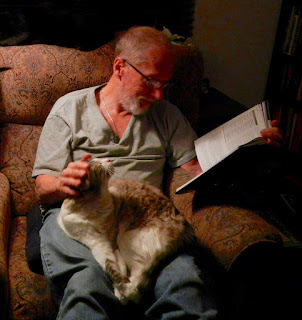 Sweet Pea with Bob
 Sweet Pea helping with this blog post

We found that when we respected her preferences, as different as these might be from our other cats, she was a lovely and constant companion.
Now Sweet Pea is five years old and a much loved member of our family. Some aspects of the Rabid Badger remain. Unasked for petting can lead to a light bite. (She did a star turn in my trailer for my "Purr Therapy" book by biting on cue in the role of the least likely candidate for becoming a therapy cat.) The other cats find her volatility fascinating. Hamish, our three-year-old flame point Siamese, will simply sit in front of her and stare, without any signs of overt hostility, and watch her go into a paroxysm of hissing, spitting, thrashing rage. Minutes later, they're cuddling up together.
Sweet Pea played the heavy in Purr Therapy trailer
Sweet Pea is loving and affectionate on her own terms, in her own time. We leave her alone when she seeks solitude and welcome her when she craves company. She has become our official greeter for guests and she tends to be friendlier to strangers than our other cats. Not long ago, my friend Mary visited us from California and quickly decided that Sweet Pea was her favorite among our four cats. "This poor kitty has received altogether too much bad press," she declared, throwing Pea a fond glance as they sat together on the couch.
 Mary contending that Pea has had "bad press"
Part of Sweet Pea's progress has been our love despite her hair-trigger temper and our acceptance of her as she is. We touch her only when she asks us to. She has taught us valuable lessons in the importance of respecting an animal's wishes instead of our insisting on cuddling this soft, furry creature. She runs a tight ship with firm boundaries and we've learned to respect these. When she feels safe and respected, Sweet Pea can be quite wonderful.
 Our beloved Sweet Pea
Every day we spend with this funny, feisty, larger than life cat who has taught us humility, the importance of respect for another creature, and the joy of hard-won love is special.
She's a living reminder of the value of not giving up.
What happens when a cute little kitten you found online in Petfinder turns out to be incredibly fierce, non-cuddly and bristles with teeth and claws?
Too often, such animals are handed back quickly to pounds and rescue organizations or, even worse, dumped and left to die -- unwanted and unloved.
While some animals have emotional and aggression issues that are tough to solve and may pose a hazard, especially if there are small children around, and that may prevent them from being realistic candidates for adoption, too many people give up too soon with what seems to be an unlovable animal. With time, patience and love, an unpromising pet can become a loving companion.
That's what happened with our own Sweet Pea.
Our saga together began in the summer of 2010. We had just lost our beloved Marina, a beautiful and sweet flame point Siamese mix, to leukemia at the age of three. Marina had been a therapy cat, helping a number of my psychotherapy patients to calm down, to smile again and, in the case of warring couples, to speak softly to each other. She was incredibly loving, sleeping on my pillow, spending hours in Bob's lap and trilling with joy whenever I looked her way. Losing her so suddenly, so young, to a disease we hadn't known she had (her rescue organization insisted that she had tested negative and we had never let her outside) broke our hearts.

Our beloved Marina
I knew that one cat never replaces another but, some months after her death, I yearned for another smart and sweet Siamese mix, preferably a flame-point -- a mixture of red or orange tabby with Siamese. There were no flame points available in local rescue groups or shelters then -- and would not be until a kitten named Hamish became available to us in 2012.
But in the summer of 2010, there was a lynx-point Siamese mix kitten at a shelter about 40 miles away. Her name was Sweet Pea. She looked so small and vulnerable in her online shelter picture. I broke precedent and contacted the shelter, saying that I would adopt her without as much as an introductory cuddle.


She wasn't in the shelter at that time because she hadn't "done well" in the facility. She was being fostered in the home of a devoted volunteer. Sweet Pea was something of a mystery. She had walked up to the door of the shelter, all alone and tiny at four weeks old one spring morning. This shelter was in the middle of the desert, miles from the city of Casa Grande. The consensus was that she had been dumped -- alone, unloved and not quite weaned.
Her foster mother Colleen described her to me as "lively, funny, feisty and larger than life." She said that she and her husband John had dubbed her "The Pea Who Will Take Over the World." I heard what I wanted to hear: lively and funny. I didn't stop to consider what feisty and "larger than life" might mean.
Tip: Listen for euphemisms. Lively might mean a holy terror. Feisty might mean you need protective gloves, garments and a face shield to handle.
Another tip: when you encounter a shelter animal with "Sweet" or "Sugar" in its name, be afraid.
When we went to the shelter to adopt Sweet Pea, Colleen and her John arrived with the kitten in their own cat carrier. Their feelings appeared mixed. John had fallen in love with Sweet Pea and had wanted to keep her. But they had five cats already. And Sweet Pea was high maintenance. They quickly transferred Sweet Pea to our cat carrier. She was ours.
Sweet Pea was unlike any cat we had ever known. Despite her tiny size, she was incredibly fierce. When our gentle old cat Gus came up to nuzzle her in a feline welcome, she bit him in the face. When our calm, sweet female cat Maggie tried to groom her, Sweet Pea hissed and lashed out. Once past her vulnerable first few days with us, she made it clear to us that she didn't want to be touched or picked up. She was a cute looking kitten who grew into a beautiful cat with wonderfully soft fur. But the greatest impression she made on us was the sharpness of her teeth and claws and her hair-trigger temper.

There were times when we were tempted to return her to the shelter, but we have always believed, through our years of living with and loving rescued cats, that adoption means a lifetime commitment. We hoped that long-term, consistent love would calm her fear and anxiety and tame her fierceness.
In the meantime, we amused ourselves with a series of descriptive nicknames like "Rabid Badger" and "Wild Weasel", which pretty much summed up her behavior and temperament. She was the anti-Marina, the feline equivalent of the Antichrist.
Bob and I dedicated ourselves to immersing this unpromising young cat in love. We talked softly to her, telling her that she was loved. We learned to respect her desire for space and autonomy, touching her only when she sought our attention. We gave her special treats.
And, in time, she became less hostile and anxious. She began to crave proximity to her people -- following us from room to room, wanting to be wherever we were, sitting beside me as I typed on the computer, her head resting on my left hand. As more time passed, she became friendlier with the other cats and sought petting from us at times of her choosing. She started cuddling beside me as I sat on the couch reading newspapers and spent hours in Bob's lap, not wanting to be touched too much, but yearning to be close. We found that she loved to have her picture taken, often jumping up to get into a photo, striking a dramatic pose.


Pea striking a Christmas pose
We found that when we respected her preferences, as different as these might be from our other cats, she was a lovely and constant companion.
Now Sweet Pea is five years old and a much loved member of our family. Some aspects of the Rabid Badger remain. Unasked for petting can lead to a light bite. (She did a star turn in my trailer for my "Purr Therapy" book by biting on cue in the role of the least likely candidate for becoming a therapy cat.) The other cats find her volatility fascinating. Hamish, our three-year-old flame point Siamese, will simply sit in front of her and stare, without any signs of overt hostility, and watch her go into a paroxysm of hissing, spitting, thrashing rage. Minutes later, they're cuddling up together.
Sweet Pea is loving and affectionate on her own terms, in her own time. We leave her alone when she seeks solitude and welcome her when she craves company. She has become our official greeter for guests and she tends to be friendlier to strangers than our other cats. Not long ago, my friend Mary visited us from California and quickly decided that Sweet Pea was her favorite among our four cats. "This poor kitty has received altogether too much bad press," she declared, throwing Pea a fond glance as they sat together on the couch.

Part of Sweet Pea's progress has been our love despite her hair-trigger temper and our acceptance of her as she is. We touch her only when she asks us to. She has taught us valuable lessons in the importance of respecting an animal's wishes instead of our insisting on cuddling this soft, furry creature. She runs a tight ship with firm boundaries and we've learned to respect these. When she feels safe and respected, Sweet Pea can be quite wonderful.

Every day we spend with this funny, feisty, larger than life cat who has taught us humility, the importance of respect for another creature, and the joy of hard-won love is special.
She's a living reminder of the value of not giving up.


